Mike Leake
What Is the Context of )Hebrews 11:11(?
(Hebrews 11) is known as the faith chapter. In this chapter, the author of Hebrews outlines several characters within the Old Testament and how they were examples of faith. All of these stories are to show us what faith looks like.
Think about Sarah’s story. She was childless all those years. It was a source of deep shame for her. It’s one thing to wrestle with barrenness when you are 25 or 35. But when you are 90 years old, that is one of those longings that has already been shut away.
A 90-year-old woman, and one who has never given birth, is likely not thinking “tonight could be the night” that she finally conceives.
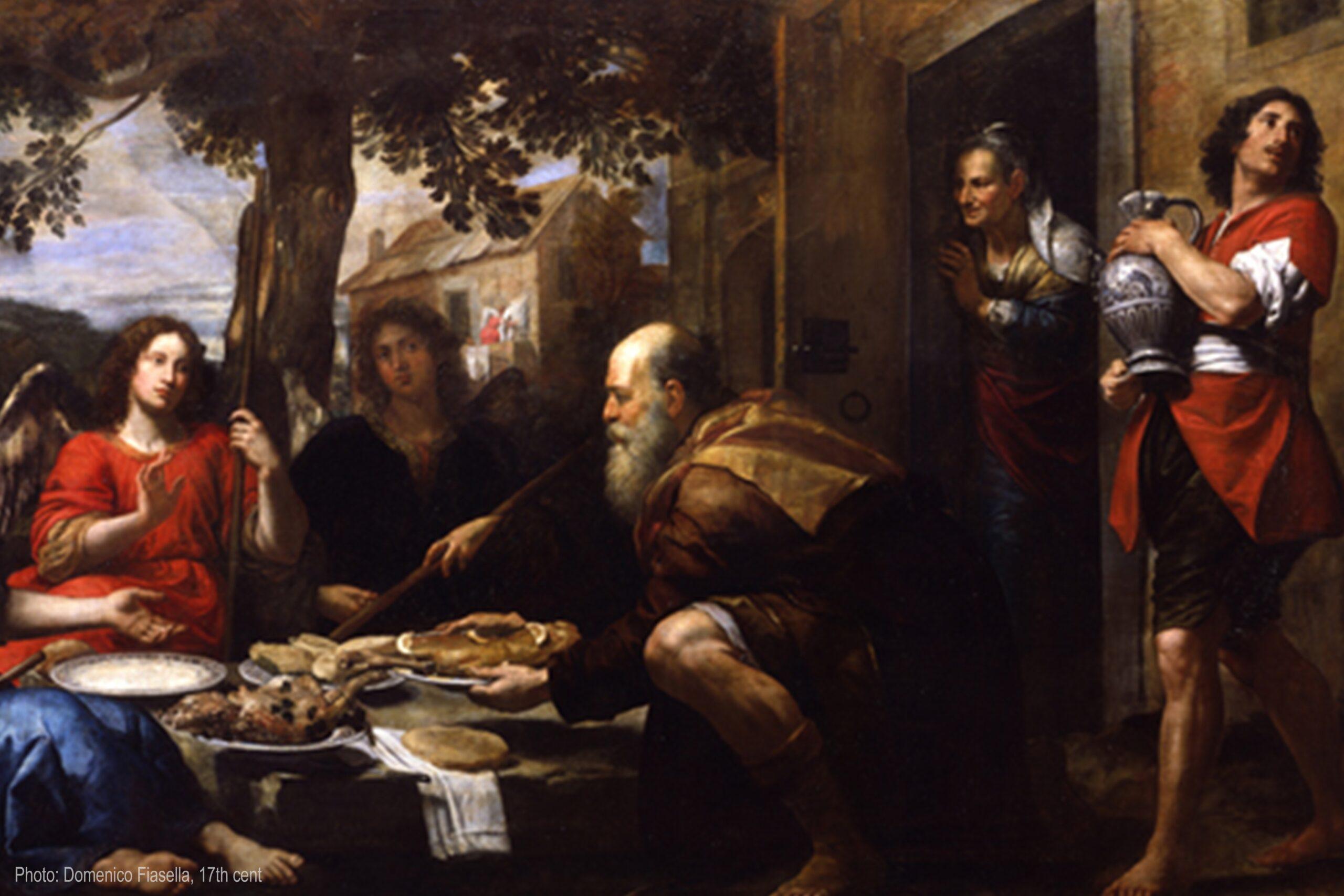
She’d have given up that dream many years ago. It simply wasn’t part of her story. It had to be laughable, then, when an angel tells her and Abraham that she will have a baby.
And when the promise was delayed, Sarah did what we all so often do. She took matters into her own hands. She convinced Abraham, who it seems was a little too easy to convince, that he ought to try to have a child with their servant girl.
But that is not who the promise would come through. Sarah matters. It is Abraham and Sarah who the promise will come through. Not just Abraham.
Is it Really Sarah Who Was Given the Power to Conceive?
It might seem a little surprising that Sarah is in this story. After all, she is the one who laughed at God. She might be a better candidate for a chapter on doubt than in a chapter on faith. But here she is. Or is she?
There is an alternative text or reading that would have Abraham as the one receiving power to conceive rather than Sarah. The NRSV captures this alternate reading when it says:
“By faith he [Abraham] received power of procreation, even though he was too old — and Sarah herself was barren — because he considered him faithful who had promised.”
That reading sounds even more plausible when we consider that the phrase “the power of procreation” is literally “the power of laying down seed.”
That is not an action, which is typically attributed to a female. In this reading, then, it is Abraham who receives the power to produce sperm, which is so powerful it can impregnate his 90-year-old wife.
Even though it is plausible to see Abraham as the subject, it is still likely that Sarah is the subject and the one who receives power to conceive.
In order for the above scenario to make sense, the phrase about Sarah would need to be construed as dative. And there is simply no textual evidence for doing that. Thus, Schreiner points out that “the best solution grammatically is to accept Sarah as the subject.”
This is not meant to be an accusation of those who might want to read Abraham as the subject instead of Sarah.
Yet, it is interesting that adopting this position puts us in a place similar to what Abraham and Sarah were in with the original promise. Does Sarah matter? Is the promise only about Abraham’s “seed”?
We see in the story of Hagar that Sarah absolutely does matter. It will be through both Abraham and Sarah that the promise will come.
This is just a little tidbit in the scriptures to remind women you matter. You are not just a vessel for children to enter the world. You are a person who matters. When you read the story of Sarah, be encouraged by this.
How Do We Apply It Today?
The story of Sarah is a reminder that God redeems our deepest hurts. As he promises in His Word (Isaiah 54:1), he takes the deepest hurt of the barren woman and causes her to shout for joy. This happens with Sarah long after she had even dreamed of having a child.
Ultimately, it is through the “seed of the woman” that is promised in )Genesis 3( that we will all have redemption. It is through the fulfillment of this promise to Sarah that God would create another miraculous birth. It is through this line that the Lord Jesus is born. Another example of hope in an unlikely circumstance.
So, when we hear Sarah’s story, let us hope. It is meant to encourage our faith and cause us to “lay aside the sin which so easily entangles us” and to press on in faith. The Lord will be true to His promises. He will lead us home.
The story of Sarah is also a story of grace. It is a reminder that our sarcastic and unbelieving laughter is not the end of the story.
Sarah could be known as a woman of great doubt. But the Bible does not portray that as her final story. Instead, she belongs in the faith chapter.