In the landscape of the New Testament, few titles are as enigmatic and profoundly significant as “The Son of Man.” While a cursory reading might lead one to believe that this title emphasizes the Lord’s physical birth and human nature, a deep theological and exegetical investigation reveals the exact opposite. Far from being a mere label of “humanity,” the title “Son of Man” was Jesus’s preferred self-designation precisely because of its immense theological weight and its roots in the celestial visions of the Old Testament.
To understand why Christ prioritized this title, we must look beyond the surface of the words and into the heart of Jewish Messianic expectations and the divine authority Christ claimed for Himself.
The Scriptural Origin: The Vision of Daniel
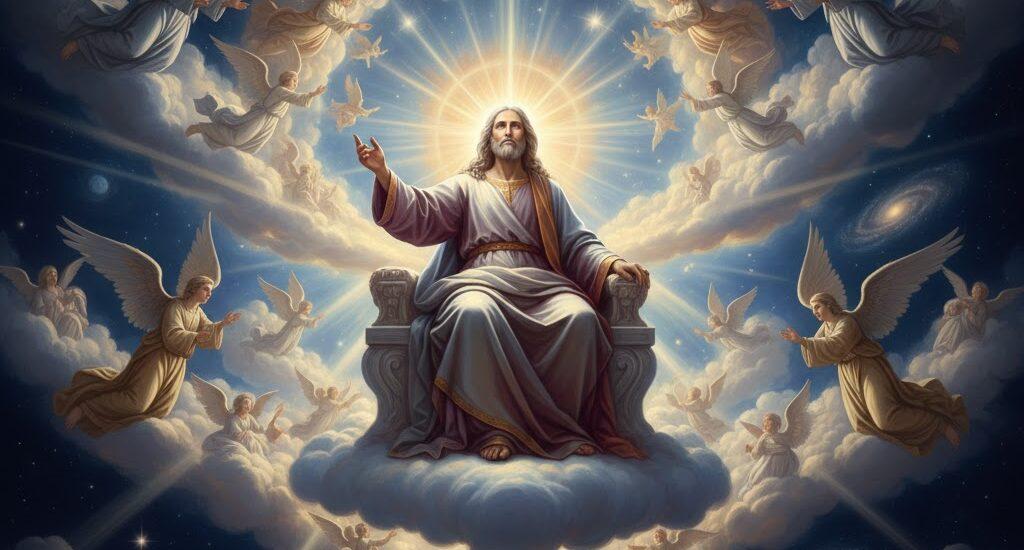
The true theological key to this title is found in the Book of Daniel (7:13–14). In a grand vision, Daniel sees “One like a Son of Man” coming with the clouds of heaven. He approaches the “Ancient of Days” (God the Father) and is given “dominion and glory and a kingdom, that all peoples, nations, and languages should serve him.”
In the Hebrew context, “riding on the clouds” is a divine characteristic reserved exclusively for God (Psalm 104:3, Isaiah 19:1). Therefore, when Jesus calls Himself the “Son of Man,” He is not simply saying He is a human being; He is identifying Himself as the Heavenly Judge and the Eternal King described by Daniel. This is a title of high Christology—a declaration of His pre-existence and His role as the Sovereign of an everlasting Kingdom.
The Statistical Magnitude of the Title
The title appears with striking frequency in the New Testament, almost exclusively on the lips of Jesus Himself. It is His “signature.”
Frequency: The title appears approximately 81 to 82 times across the four Gospels.
Matthew: 30 times
Mark: 14 times
Luke: 25 times
John: 12 or 13 times
The Exception: It is rarely used by others to address Jesus. Apart from the Gospels, it is used by the first martyr, St. Stephen, in (Acts 7:56), when he sees the heavens opened and the “Son of Man standing at the right hand of God.” This reinforces the title’s association with divine glory and the heavenly realm.
Why Did Christ Focus on This Title?
Theologians suggest several reasons why Jesus preferred “Son of Man” over “Son of God” or “Messiah” in His public ministry:
To Avoid Political Misunderstanding: In the First Century, the term “Messiah” (Christ) was heavily loaded with political and military expectations. Many Jews expected a Messiah who would overthrow the Roman Empire. By using “Son of Man,” Jesus utilized a title that pointed to a supernatural, celestial origin rather than an earthly, political one.
The Paradox of the Incarnation: The title allowed Jesus to bridge the gap between His suffering and His glory. It encapsulated the Hypostatic Union—He who is truly God became truly man. It allowed Him to speak of His upcoming death and His future return as Judge in a single breath.
The “Messianic Secret”: It served as a veiled revelation. To those without faith, it sounded like “a human being,” but to those who knew the Scriptures (Daniel 7), it was a shocking claim to equality with the Almighty.
Proving the Theological (Divine) Nature of the Title
The Gospels categorize the “Son of Man” sayings into three distinct areas, all of which point to His divinity:
1. Authority Over the Divine Law and Sins
In (Mark 2:10), Jesus says, “But that you may know that the Son of Man has power on earth to forgive sins…” In Jewish theology, only God can forgive sins. By linking the title to the authority to forgive, Jesus proves that the Son of Man possesses divine prerogatives.
Furthermore, in (Matthew 12:8), He declares, “For the Son of Man is Lord even of the Sabbath.” The Sabbath was instituted by God; only the Creator of the Sabbath can be “Lord” over it. This is a clear assertion of His deity.
2. The Final Judge of the Universe
Jesus repeatedly links the “Son of Man” to the Parousia (The Second Coming).
“When the Son of Man comes in His glory, and all the holy angels with Him, then He will sit on the throne of His glory. All the nations will be gathered before Him…” (Matthew 25:31-32).
Only God is the Judge of all the earth. By claiming this role for the Son of Man, Jesus is claiming the ultimate theological seat of authority.
3. The Evidence of the Sanhedrin Trial
Perhaps the most definitive proof that “Son of Man” is a divine title is the trial of Jesus before the High Priest, Caiaphas. When asked if He is the Christ, Jesus responds:
“I am. And you will see the Son of Man sitting at the right hand of the Power, and coming with the clouds of heaven.” (Mark 14:62).
Upon hearing this, the High Priest tore his clothes and cried out, “Blasphemy!” Why? If “Son of Man” merely meant “a man,” there would be no blasphemy. The High Priest understood exactly what Jesus was doing: He was applying (Daniel 7:13) to Himself, claiming to be the divine being who sits on the throne of God.
The Johannine Perspective: The Heavenly Origin
In the Gospel of John, the title is used to emphasize Christ’s descent from heaven.
(John 3:13): “No one has ascended to heaven but He who came down from heaven, that is, the Son of Man who is in heaven.”
(John 6:62): “What then if you should see the Son of Man ascend where He was before?”
These verses eliminate any doubt about the “human-only” interpretation. The Son of Man existed in heaven before the world began. He is the pre-existent Word who became flesh.
Conclusion: The Bridge Between Heaven and Earth
The title “Son of Man” is the ultimate expression of the Mystery of Godliness. It is theological because it identifies Jesus as the one Daniel saw in the clouds; it is redemptive because it identifies Him as the one who came to serve and give His life as a ransom; and it is eschatological because it identifies Him as the King who will judge the living and the dead.
When we call Him “Son of Man,” we are not just acknowledging His kinship with us; we are worshiping the One who, though being the Eternal Son of God, took our likeness so that He might bring us to His throne. It is a title of power, a title of divinity, and a title of ultimate victory.
Key Scriptural References for Further Study:
The Prophecy: (Daniel 7:13-14)
Authority to Forgive: (Mark 2:10)
Lord of the Sabbath: (Matthew 12:8)
The Second Coming: (Matthew 24:30; Matthew 25:31)
The Trial and Blasphemy: (Matthew 26:64-65)
The Vision of Stephen: (Acts 7:56)
Summary Table for the Reader
Aspect
Proof of Divinity
Origin
(Daniel 7:13) – Coming with the clouds of heaven (A divine trait).
Authority
(Matthew 12:8) – Lord over the Sabbath (Only God is Lord of the Sabbath).
Power
(Luke 5:24) – Power on earth to forgive sins (Only God can forgive).
Judgment
(Matthew 25:31) – Sitting on the throne of glory to judge all nations.
Trial
(Mark 14:62) – His claim to this title was the reason for the charge of blasphemy.